
Full Cycle Ahead: Māngere BikeFIT Mechanic Graduates Its Second Cohort
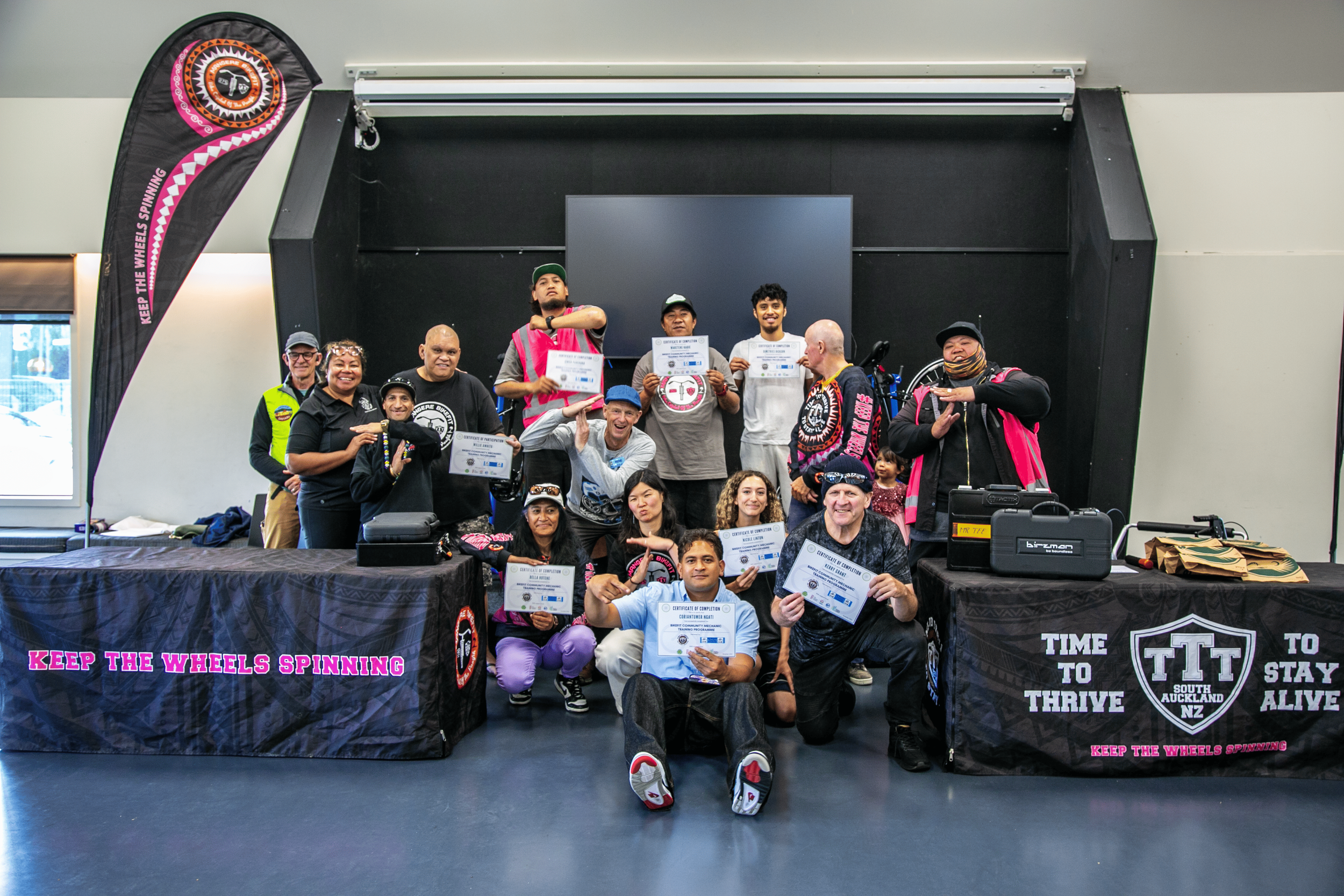
Graduates from the second BikeFIT Mechanic course with the project team. Photo by Haimona Ngata.
Following the success of the first Māngere Green Skills: BikeFIT Mechanic course earlier this year, the second cohort has now crossed the finish line - bringing even more momentum to a kaupapa first imagined by local leader Teau “Mr Tee” Aiturau.
The course began as a collaboration between Triple Teez, Auckland Transport, and The Southern Initiative, responding to a real need emerging in Māngere. As new cycleways rolled out across the area, it became clear that many whānau didn’t just need access to bikes; they needed the skills to ride confidently, repair their own bikes, and feel safe on the road.
Building on the success of Intake One
Delivered with expert guidance from Rene “The Bike Professor” van Rijn, the course equipped participants with practical bike repair and maintenance skills, safe riding techniques, and the know-how to troubleshoot common mechanical issues. Just as importantly, it helped them build the confidence to support others in their community - turning technical learning into leadership.
Rene says the transformation was clear from the outset.“The impact on the participants was obvious. They learned a lot of very useful bike related things, but they also learned to judge much better what to fix or not. And they kept the enthusiasm from beginning till end, which was very rewarding.”
Beyond the mechanical skills, the personal growth among participants was just as evident. Many spoke about the confidence they gained, strengthened by a strong sense of whanaungatanga that formed across the sessions and by learning from a respected expert who made mechanics feel accessible and fun.
One graduate, Dimetries Dickson, said the programme has already had a ripple effect at home. “I’m so happy to have been part of this programme. It has motivated my whānau too - my brother now wants to learn how to fix cars.”
Beyond the improvements in cycling confidence and repair knowledge, the programme is also supporting wider outcomes for the community. Participants are building confidence and practical capability that prepares them for mechanical, technical, and trades-based pathways. It’s a clear example of how community-led design, grounded in local needs, can grow early-stage skills that support both social impact and emerging economic opportunities in the community.
Looking Ahead
With two cohorts now successfully graduated, the next phase of the kaupapa is already taking shape. Planning is underway for a rangatahi-focused pilot in local secondary schools, where graduates from Intakes One and Two will step into teaching roles - passing on the very skills and confidence they’ve gained to students at Māngere College and Southern Cross Campus.
Time to Thrive Operations Manager Sokko Seeto says this next step reinforces the heart of the kaupapa. “From conception to completion, this pilot proves that for our communities to thrive, they have to be the focus from programme design to delivery. Pastoral care has been an important part of ensuring success for every student in this pilot.”
What began as a response to new cycleways has now grown into something much deeper: a Green Skills initiative in every sense of the word. Participants aren’t just learning practical, low-carbon transport skills - they’re stepping into teaching roles, helping the kaupapa evolve into a self-sustaining course led from within the community.
And with graduates now preparing to teach the next generation, the movement is coming full cycle.
Related links: